Exploring the Pantanal Paraguayo
Most visitors who've heard of the Pantanal know the Brazilian side — the boat lodges, the jaguar-spotting excursions, the crowds of birders with long lenses. Far fewer know that the wetland system spills into Paraguay's far north as well, in the remote Alto Paraguay department near the Brazilian and Bolivian borders. The Pantanal Paraguayo is smaller in area than its Brazilian neighbour and dramatically less developed for tourism, which is exactly its appeal: this is one of the last genuinely wild corners of the country, reached by river rather than road, and worth the effort for anyone serious about wildlife.
What makes the Pantanal Paraguayo different
The Pantanal is the world's largest tropical wetland system, and Paraguay's slice of it sits at the meeting point of wetland, dry Chaco scrub and gallery forest, which makes for an unusually varied mix of habitats in a small area. Seasonal flooding drives everything here: during the wet months the wetlands swell and wildlife concentrates around the remaining high ground and waterways, while the dry season opens up more of the terrain on foot but pushes animals toward permanent water sources, which can actually make sightings easier. Either season has its case; what stays constant is how few other visitors you'll see once you're out there.
The wildlife worth the trip
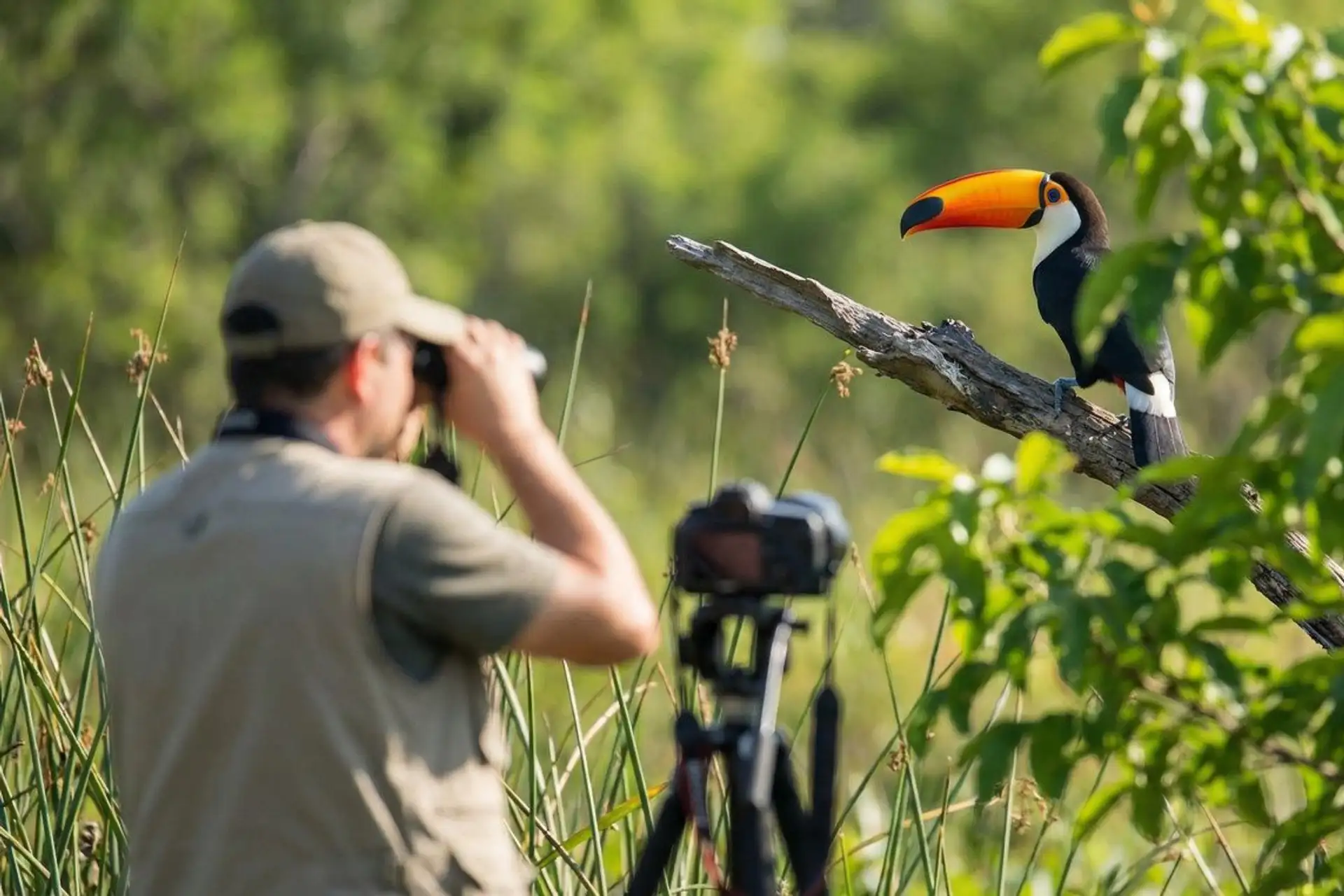
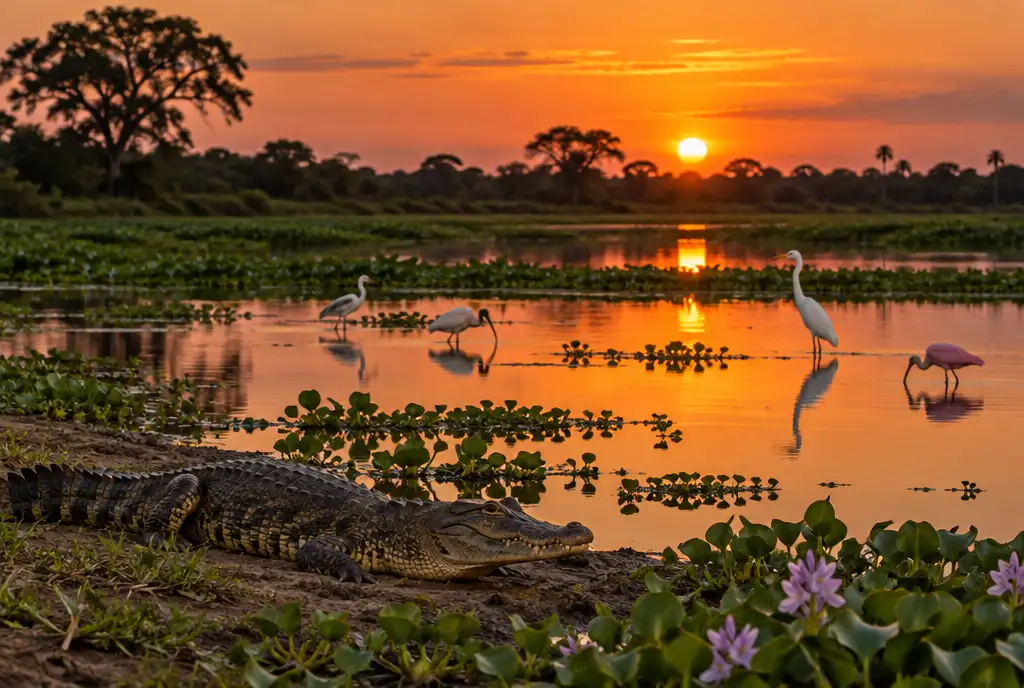
This is prime territory for serious birders — jabiru storks, hyacinth macaws and a long list of waterbirds are all realistic sightings, and the Pantanal region generally is considered one of the best wildlife-viewing environments in South America, jaguars included, though a jaguar sighting anywhere is still down to patience and luck rather than a guarantee. Capybaras, caimans and a wide range of waterfowl are far more reliably seen. If you've done birdwatching elsewhere in Paraguay and want the version with genuinely wild, hard-to-reach terrain behind it, this is where that trip leads.
Getting there and what to expect
Reaching the Pantanal Paraguayo is part of its character rather than an inconvenience to route around. The main access point is the town of Bahía Negra, on the Río Paraguay, typically reached by boat from Concepción or by small charter flight — there is no simple road route in from Asunción, and this is genuinely remote country. Once there, exploring the wetlands themselves usually means boat trips along the river and its tributaries, since much of the terrain is impassable on foot for large parts of the year. This is not a spontaneous day trip; it needs planning, a realistic amount of travel time, and a guide or outfitter who knows the region, given the remoteness and lack of infrastructure. If you hire one, ask for the price, inclusions, transport and cancellation terms in writing, check that a tour operator is registered with SENATUR, and confirm what safety and insurance cover applies on the river.
The Chaco connection
The Pantanal Paraguayo doesn't sit in isolation — it borders the northern reaches of the Gran Chaco, the vast dry forest and scrubland that covers much of western Paraguay, and the transition between the two ecosystems is part of what makes this corner of the country so rich for wildlife. Travellers who've spent time in the Chaco around Filadelfia will notice a very different landscape once they're in wetland country — more water, denser vegetation along the riverbanks, a different soundscape of birdlife altogether. Some visitors combine the two, using a Chaco stopover as a way to break up the long approach to Bahía Negra, though it's worth being realistic about the distances and travel time involved before building an itinerary around both in a single short trip.
Practical information
- Getting there: via Bahía Negra on the Río Paraguay, typically reached by boat from Concepción or by small charter flight — there's no direct road route from Asunción
- Best time to visit: dry season generally makes wildlife easier to find as animals concentrate near remaining water; wet season floods more of the terrain but has its own scenery
- What to bring: binoculars, insect repellent, sun protection, and clothing you don't mind getting wet or muddy on boat trips
- Who it suits: birdwatchers, wildlife enthusiasts and travellers comfortable with remote, infrastructure-light travel
- Planning: this trip needs advance planning and a knowledgeable guide or outfitter — check current access, transport and lodging options before you commit to dates
Frequently asked questions
Where is the Pantanal Paraguayo?
It's in Alto Paraguay department in the far north of the country, near the borders with Brazil and Bolivia, centred around the town of Bahía Negra on the Río Paraguay.
How do I get to the Pantanal Paraguayo?
Most visitors arrive by boat from Concepción along the Río Paraguay, or by small charter flight to Bahía Negra. There's no straightforward road route from Asunción, which is a large part of why this area sees so few visitors.
What wildlife can I expect to see?
Waterbirds are the most reliable sightings — jabiru storks, hyacinth macaws and a wide range of waterfowl, along with capybaras and caimans. Jaguars are present in the region but a sighting is never guaranteed.
Is the Pantanal Paraguayo worth visiting compared to the Brazilian side?
It depends what you want. The Brazilian Pantanal has far more infrastructure and easier access; the Paraguayan side offers a wilder, much less visited alternative for travellers who don't mind more effort to get there.
Do I need a guide to visit?
Given the remoteness and the lack of infrastructure, a guide or local outfitter is strongly recommended rather than optional — most of the wetland is only sensibly explored by boat with someone who knows the waterways.
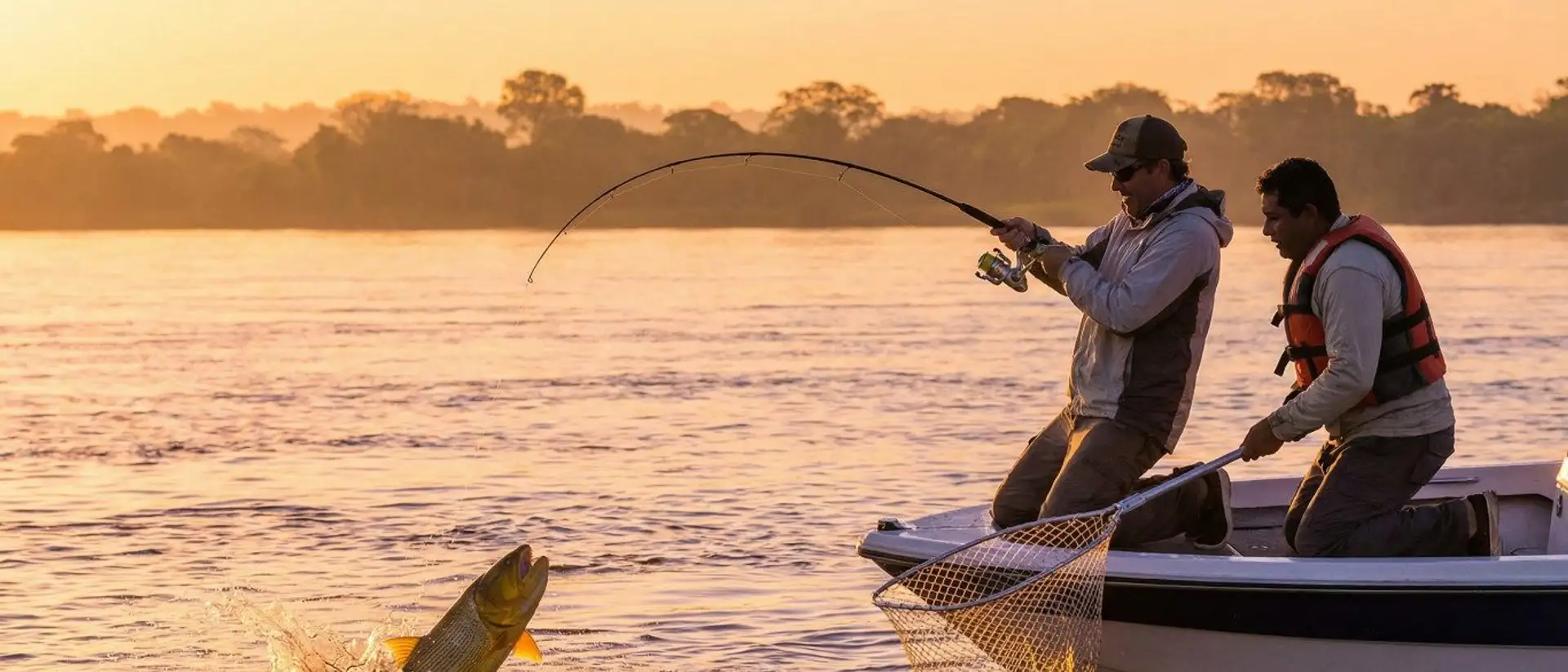
Few trips in Paraguay reward patience the way this one does — the payoff is measured in birds spotted and silence rather than convenience. If wildlife-watching is what draws you, our bird-watching guide covers this region alongside other prime sites, and the fishing guide explains how river fishing trips usually work if you would rather spend your days on the water with a rod in hand. For more of Paraguay's wild side closer to the capital, see our guide to the country's national parks. Spotted something out of date? Let us know.