Fishing Charters in Paraguay: How to Plan and Hire a Trip
How sport fishing trips work on the Paraná and Paraguay rivers, and how to hire a charter yourself
How fishing charters in Paraguay work, what you can catch on the Paraná, and how to evaluate and hire a boat, guide or lodge directly.
Independent guide: we do not sell, book or arrange this trip or any service mentioned here, and no provider paid to appear. Prices, timetables and rules change — confirm them with the provider or the official source before you go.
Fishing charters on the Paraná and Paraguay rivers let you target the golden dorado, surubí and pacú with a local captain. This guide explains how a charter works and how to find, compare and hire one yourself.
Chasing the Tiger of the River
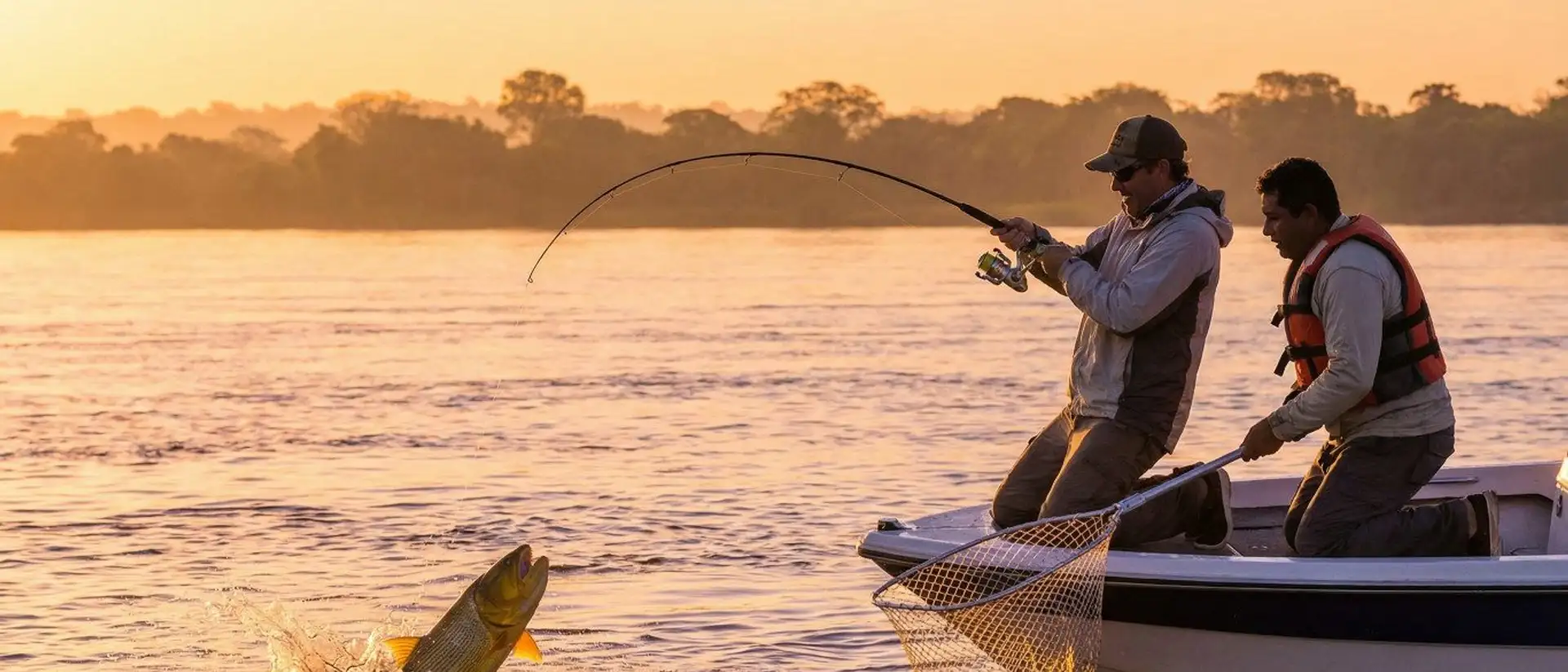
The Paraná is home to one of the most aggressive freshwater fish in South America: the golden dorado. Whether you prefer fly fishing or casting, a local captain who knows the channels, the water levels and the rules can make the difference between a slow day and a memorable one. Start by choosing a region and a season, then contact several providers directly.
How Fishing Charters Work on a River of Giants
Paraguay is a well-known destination for freshwater anglers. The Paraná and Paraguay rivers hold species that draw sport fishers from across the region, including the golden dorado, famous for acrobatic jumps and hard strikes, and the surubí, a large spotted catfish that can grow very big. Pacú and boga are also popular, both as a fight and as food.
These are big, busy rivers. Currents are strong, water levels change quickly, and the best fishing is often far from the capital. Most visitors fish with a local captain or a lodge rather than on their own, which is what a fishing charter is: a boat, a captain-guide and usually tackle, hired for a day or several. This guide explains how that works and how to find and evaluate a charter yourself.
How to Plan and Hire Fishing Charters Yourself
You can organise a fishing trip directly with a captain, lodge or guide in the area you want to fish. There is no need for an intermediary, and you can compare more than one option.
A typical process looks like this:
- Choose a region. Popular areas include the Paraná near Ayolas, the stretch around Paso de Patria where the Paraná and Paraguay rivers meet, and nearby fishing hubs such as Cerrito. Ayolas is roughly 3.5 to 4.5 hours by road from Asunción, so many anglers plan an overnight stay.
- Pick a target and a season. Dorado, surubí and pacú each have their own season and technique, and the right choice depends on water levels and temperature.
- Contact a few captains, guides or lodges directly. Ask what is included, such as the boat, fuel, tackle, bait, food and drinks, accommodation and transport. Fees and packages differ widely.
- Get everything in writing. Request the price, the hours on the water, the inclusions and exclusions, the cancellation and weather policy, and the payment terms.
- Sort out permits and rules. See the section on licences and seasons below.
For more on the surrounding region, see the guide to Paraguay's national parks and the Paraná River on Wikipedia.
Licences, seasons and rules
Sport fishing in Paraguay is regulated by the national authorities. In general, anglers need a fishing licence or permit, and there are rules on closed seasons (known as the veda), protected species, sizes and catch limits, which can vary by species, river stretch and year. Fees, dates and requirements change, so confirm the current rules with the Ministry of the Environment and Sustainable Development (MADES) before you go: mades.gov.py. Ask your captain or lodge what they expect you to arrange and what they handle, and never assume that a licence is included.
The fish and where to find them
-
The golden dorado, "el tigre del río"
The trophy fish for many anglers. Known for its gold scales, fierce strikes and aerial fights, it is a strong, hard-fighting freshwater fish. Many serious anglers practise catch and release to protect the fishery, and local rules may require it in some places or seasons. Warmer months are often cited as the best time, but check with a local captain.
-
The surubí, the bottom giant
The surubí is a large spotted catfish that fishers take from deeper channels and holes. It can grow to a very large size, fights stubbornly and is more active in some conditions than others. Local rules on size and retention may apply, so ask a captain and check the official regulations.
-
Pacú and boga, the table fish
Pacú and boga are popular for the fight and for the table. Many anglers keep a few for a shore lunch, where the captain cooks the catch over a fire on a sandbar, but confirm what is legal and what the crew will prepare.
Tips before you go
-
Choose the captain, not just the boat
Local experience matters. A captain who has fished the river for years knows where fish are moving at different water levels and temperatures, and how to handle the boat safely on strong currents. Ask how long they have worked that stretch and for references.
-
Check safety equipment
The Paraná is a working waterway with commercial traffic. Ask whether the boat has life jackets for everyone, a working radio or phone coverage plan, reliable engines, a first-aid kit and shade. Check whether the boat is registered with the relevant naval authority and insured.
-
Clarify gear and inclusions
Some charters supply rods, reels, lures and live bait, and others expect you to bring your own. Ask for a clear list. If you fish with fly gear, ask whether the water and the targets suit it.
-
Check the fishing rules and permits
Confirm licence requirements, closed seasons, protected species and catch limits with MADES, and ask the captain which rules they follow. Do not rely on a verbal "it's fine".
-
Understand the cancellation policy
River levels, storms and wind can cancel a day on the water. Ask in advance what happens if the trip cannot go ahead, how deposits are handled, and agree it in writing. Be cautious about paying the full amount far in advance.
-
Protect yourself from sun and insects
Bring a hat, sun protection, polarised glasses and plenty of water. Mosquitoes are most active near the river at dawn and dusk, so bring repellent and long sleeves.
Practical information
- Time needed
- A full day is typically 8 to 10 hours on the water. Many anglers prefer 2 to 3 days with a night in a lodge.
- Getting there
- Popular hubs such as Ayolas are roughly 3.5 to 4.5 hours by road from Asunción, by car or bus, plus a local transfer to the river.
- Best time to go
- Dorado fishing is often described as best in the warmer months (roughly September to April). Surubí can be caught more widely through the year. Seasons and closures change, so ask locally.
- Costs
- Boat and guide fees, lodging, food, fuel, tackle and licence fees all vary. Compare written offers from several providers.
- Fishing licence
- Generally required. Check current rules and fees with MADES (mades.gov.py) and confirm what a captain or lodge arranges on your behalf.
- Official information
- MADES for fishing rules and licences, and the Paraguayan tourism authority SENATUR (senatur.gov.py) for tour operator registration.
Frequently asked questions
-
Do I need a fishing licence?
In general, yes. Sport fishing in Paraguay is regulated, and licences or permits are normally required. The exact rules, fees and any closed seasons change, so check with MADES before you go and ask your captain or lodge what they expect you to arrange.
-
Can I keep the fish?
Practices vary by species and location. Dorado is often released by serious anglers to protect the fishery, and local rules may require it in some places or seasons, while pacú and boga are commonly kept for the table. Check the current regulations and ask your captain.
-
Do I need to bring my own equipment?
It depends on the charter. Some supply rods, reels, lures and live bait, and others do not. Ask for a written list of what is included, and bring your own gear if you have a preferred setup.
-
Are food and drinks included?
It varies between charters and lodges. Ask exactly what is covered, including drinking water, lunch and any alcohol.
-
How far is the drive?
The best fishing is not in Asunción, where the river is busy with barges. Ayolas and Cerrito are roughly 3.5 to 4.5 hours by road, which is why many anglers plan an overnight stay near the river.
-
Are mosquitoes a problem?
They are common near the river at dawn and dusk. Bring repellent and long sleeves, as this is normal for fishing the Paraná rather than a special hazard.
-
Can beginners join a fishing trip?
Yes. Many captains are used to coaching first-timers on casting and handling big fish, but ask whether they are comfortable with beginners before you commit.
-
What if we do not catch anything?
Fishing is fishing. Even with a good captain, some days are slower than others depending on water level and season. Ask what the provider's policy is in advance, and treat any promise of guaranteed fish with suspicion.
-
How do I evaluate a fishing charter or lodge?
Compare more than one option. Check whether the operator is registered with SENATUR where that applies, ask for the price, hours and inclusions in writing, confirm safety equipment and boat insurance, ask for references and read recent independent reviews, and agree the cancellation terms and payment schedule in advance.
Planning Your Fishing Charters Trip
The Paraná offers some of the best freshwater fishing in South America, and a well-chosen captain makes all the difference. Do your homework on rules and safety, compare a few options and agree everything in writing. You can read more about the dorado and about Paraguay generally. If you want to see more of the south, the Jesuit ruins lie in the same direction, and our Paraguay tour guide suggests how to fit them together.
Spotted something out of date? Let us know.