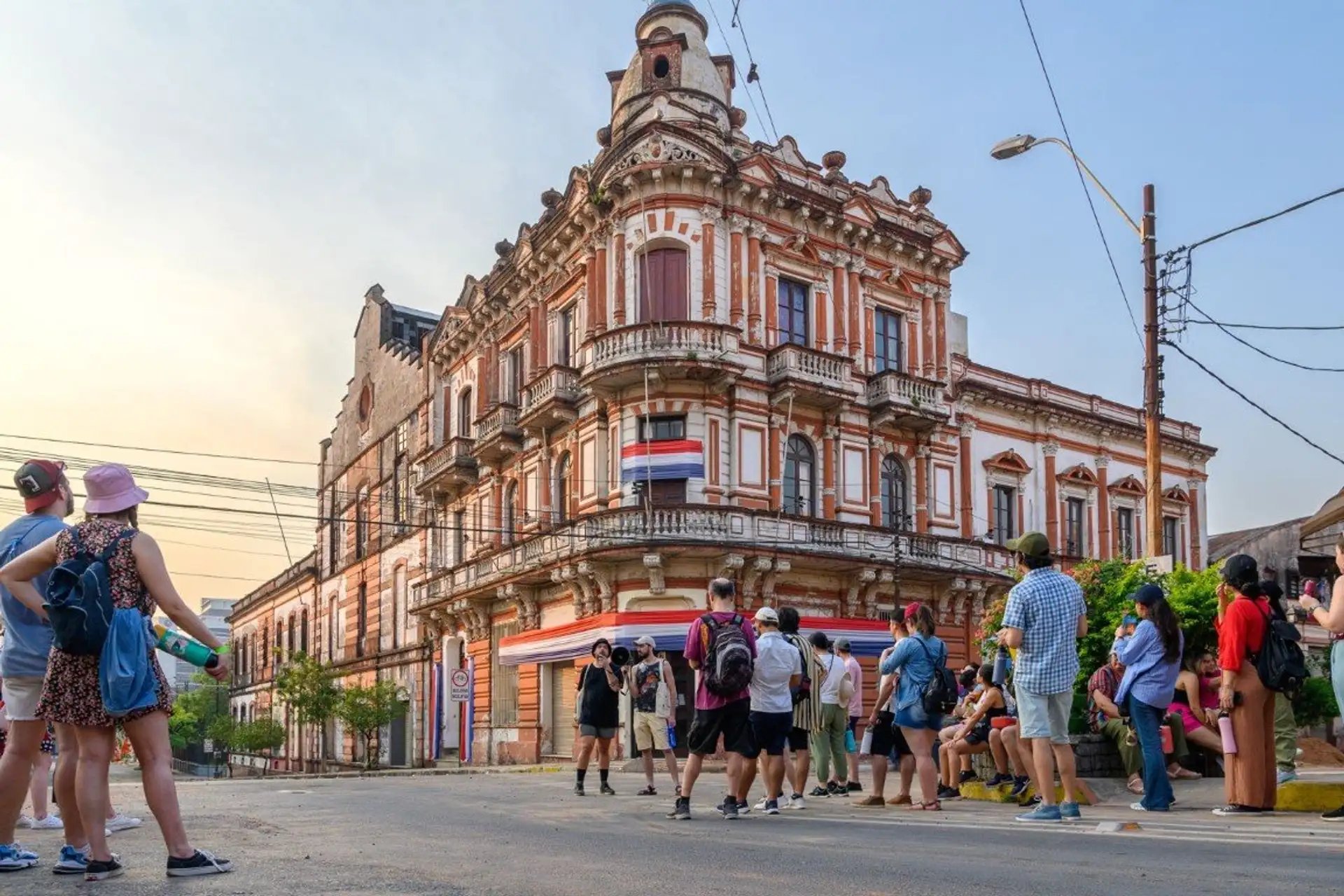
Jesuit Ruins Tour: How to Visit Trinidad and Jesús on Your Own
A self-guided look at the UNESCO Jesuit missions of Trinidad and Jesús de Tavarangue
How to plan your own Jesuit ruins tour of Trinidad and Jesús de Tavarangue, the UNESCO sites in Paraguay's Itapúa region, by bus, car or local driver.
Independent guide: we do not sell, book or arrange this trip or any service mentioned here, and no provider paid to appear. Prices, timetables and rules change — confirm them with the provider or the official source before you go.
A jesuit ruins tour of southern Paraguay takes in the UNESCO World Heritage missions of La Santísima Trinidad del Paraná and Jesús de Tavarangue. This guide is for travellers who want to do it on their own, by bus, rental car or with a local driver or guide they hire directly.
The Missions at a Glance
Deep in the red lands of Itapúa stand the remains of one of South America's most unusual experiments in shared living. Trinidad and Jesús de Tavarangue are the only UNESCO World Heritage sites in Paraguay. Trinidad is the larger and better preserved. Jesús is smaller, unfinished and strikingly architectural. Together they make a half day of sightseeing and a very full day of travel, which is why many visitors add a night in nearby Encarnación.
Planning a Jesuit Ruins Tour of Paraguay's "Lost Cities"
The red sandstone missions of southern Paraguay are among the most rewarding things you can see in the country, and among the easiest to underestimate. Most visitors know the story from films and books about the Jesuit reductions. Few expect the scale of the churches, the carved stonework that survives, or how far south you have to travel to see it.
The two main sites, La Santísima Trinidad del Paraná and Jesús de Tavarangue, lie in the department of Itapúa, roughly 5 to 6 hours by road from Asunción (about 400 km, depending on traffic and where you start). Both are UNESCO World Heritage sites, and both are close enough to each other and to the city of Encarnación that you can see them together on a single visit. This guide explains how to get there, how to order your day, and how to find a local guide if you want the history explained.
How to Do the Jesuit Missions Yourself
The missions, or reductions, were settlements where Jesuit priests and Guaraní communities lived together from the early 17th century until the Jesuits were expelled from Spanish territories in 1767. At their height they formed an organised network of towns with churches, workshops, schools and farmland. What you see today are the stone remains of that experiment, set in open grass.
There are three realistic ways to reach the sites on your own:
- Public bus to Encarnación, then a local bus or taxi. Long-distance buses run from the Asunción bus terminal to Encarnación (see our Asunción bus terminal guide). From Encarnación, local buses and taxis serve the road towards Trinidad and Jesús. Ask the driver or the terminal staff where to get off, and confirm the return times before you head out, as services thin out in the afternoon.
- Rental car. The route follows Route 1 south and then Route 6 east towards Trinidad, and the roads are generally paved. A car gives you the most flexibility, especially for combining both sites in a day. Allow for fuel stops, police checkpoints and slow trucks, and carry your passport or ID and driving documents.
- A hired local driver or guide. For a long day with fewer logistics you can hire a driver or a licensed guide directly. See the checklist below for how to evaluate one.
If you want more background before you go, read our overview of the Jesuit missions of Paraguay, and see the UNESCO listing for the two sites.
Suggested route
-
The drive south
The journey is part of the trip. Route 1 passes through small interior towns, cattle country and fields where the soil changes from brown to deep red. Start early, break the drive with a stop for coffee or chipa, and expect to reach the Itapúa region in roughly 5 to 6 hours from Asunción. If you are using public transport, the same distance is usually a few hours longer once you add the connection from Encarnación.
-
La Santísima Trinidad del Paraná
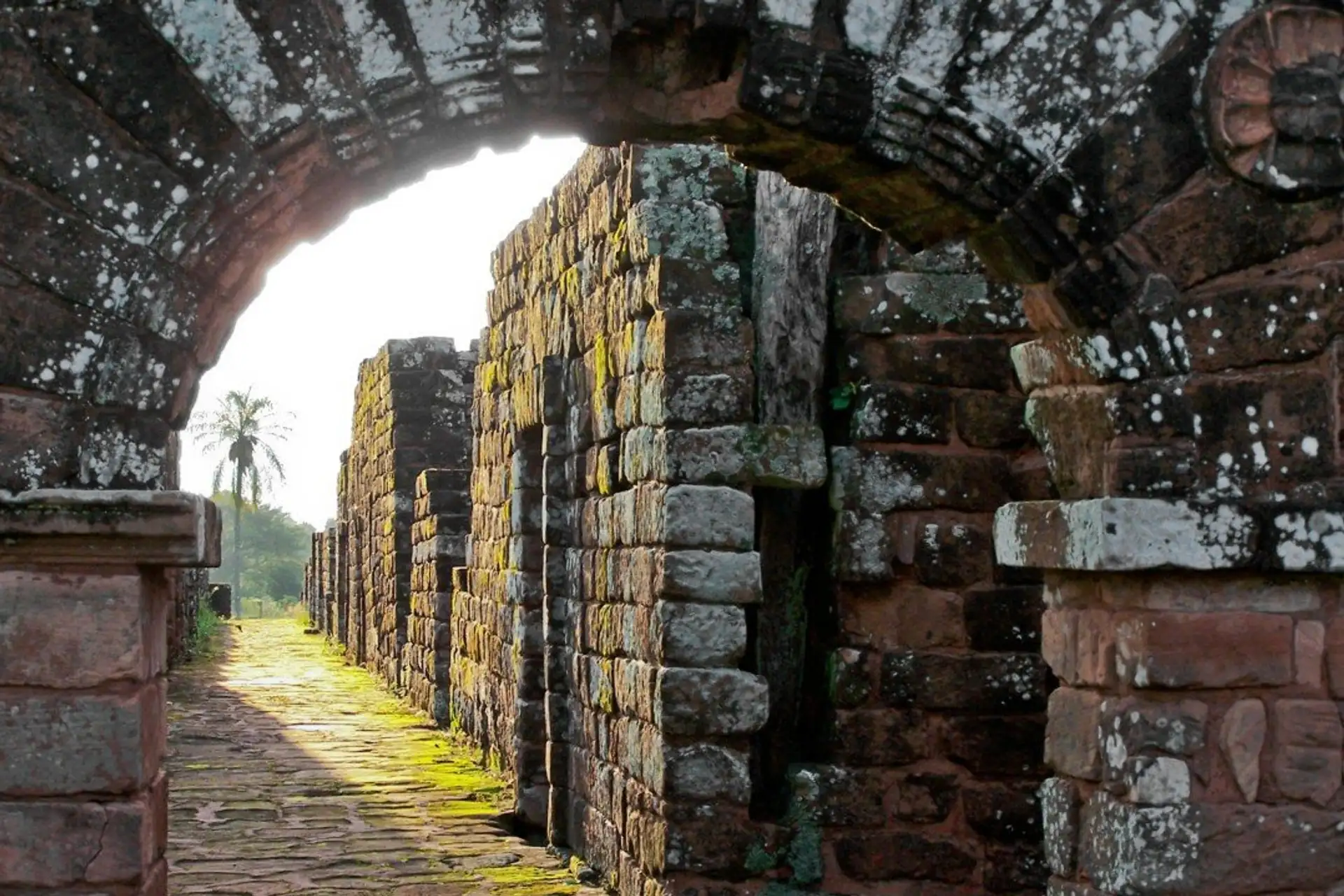
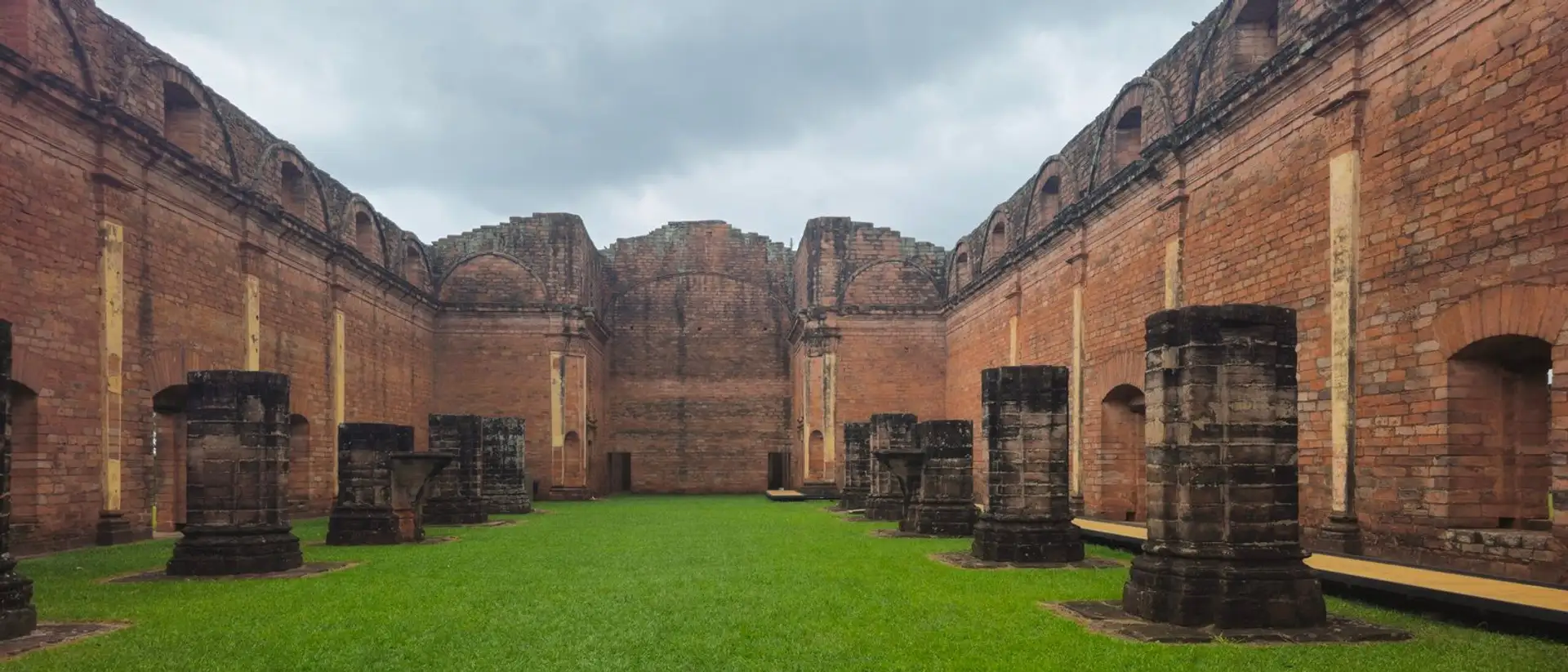
The largest and best-preserved of the Paraguayan missions, and the one most visitors put first. You can walk the great central plaza, see what remains of the monumental church, look for the carved stone reliefs, including angels playing instruments, and visit the other buildings around the plaza. Plan at least a couple of hours, more if you like to read the information panels or ask a guide for context.
-
Jesús de Tavarangue
A short drive from Trinidad (roughly 10 km), Jesús de Tavarangue is smaller and was never finished before the Jesuits were expelled. It is known for its Moorish-influenced arches and a more open, architectural feel than Trinidad, as if construction had simply stopped. Many travellers find that 1 to 1.5 hours is enough here.
-
Encarnación for lunch or an overnight stop
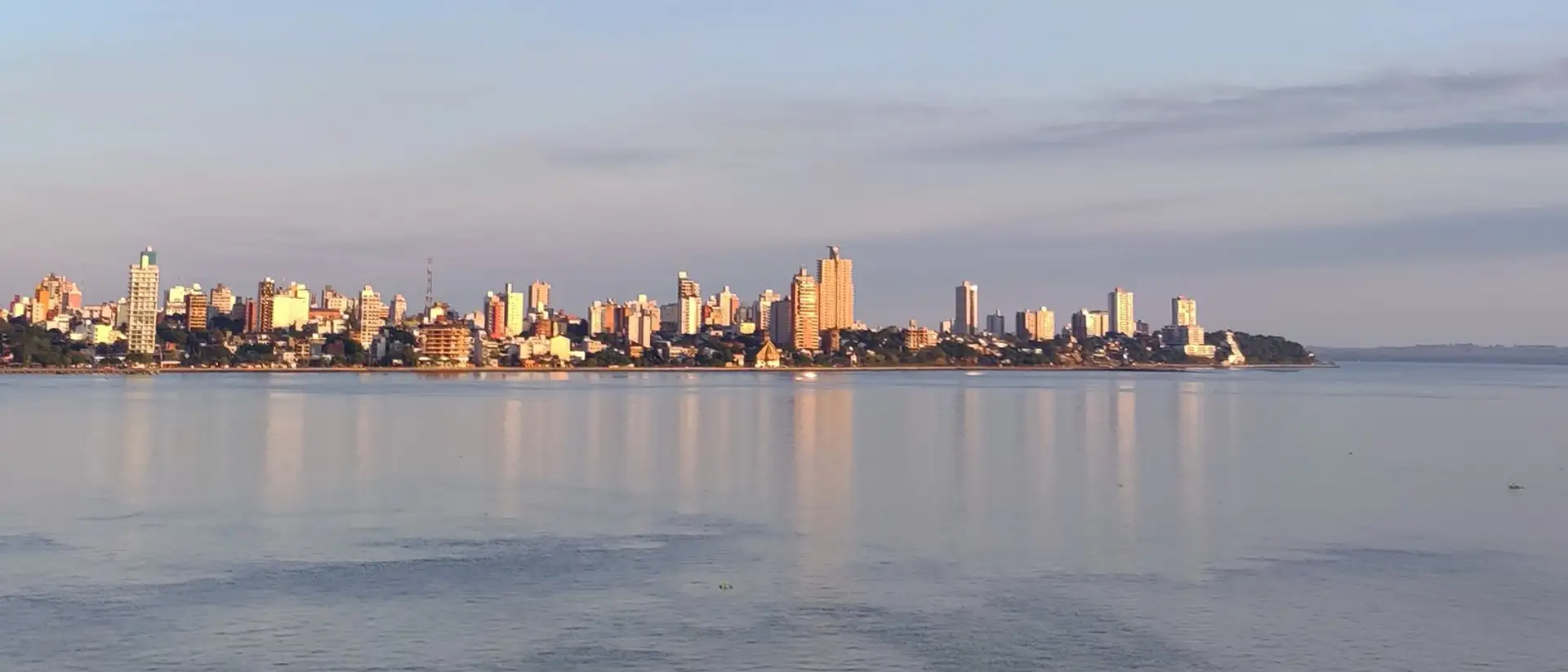
Encarnación, on the Paraná River, is the natural base for this trip. It has a riverside promenade (the costanera), restaurants and a range of hotels. If you do not want a 12-hour day, sleep in Encarnación and visit the ruins the next morning, when the light is better and the sites are quieter.
Tips before you go
-
Decide between a day trip and an overnight stay
In one day from Asunción you can see both sites, but you will spend 10 to 11 hours or more on the road. If your time allows, an overnight stay in Encarnación makes the whole trip calmer and gives you better light for photographs.
-
Start early and bring sun protection
There is little shade at either site. Bring a hat, sunscreen, water and comfortable closed shoes, as the ground is uneven stone and grass. Early morning and late afternoon are the most comfortable and photogenic times.
-
Check opening hours and fees at the source
Entry fees, opening hours and any evening programme can change. Confirm them with the site, with the Paraguayan tourism authority (SENATUR) or with your hotel before you travel, rather than relying on an older page.
-
The evening light-and-sound show is not nightly
Trinidad has run an evening light-and-sound programme in the past, usually on selected evenings and subject to weather. If it matters to you, check whether it is running on your dates before you build your plan around it.
-
Consider a local guide for the history
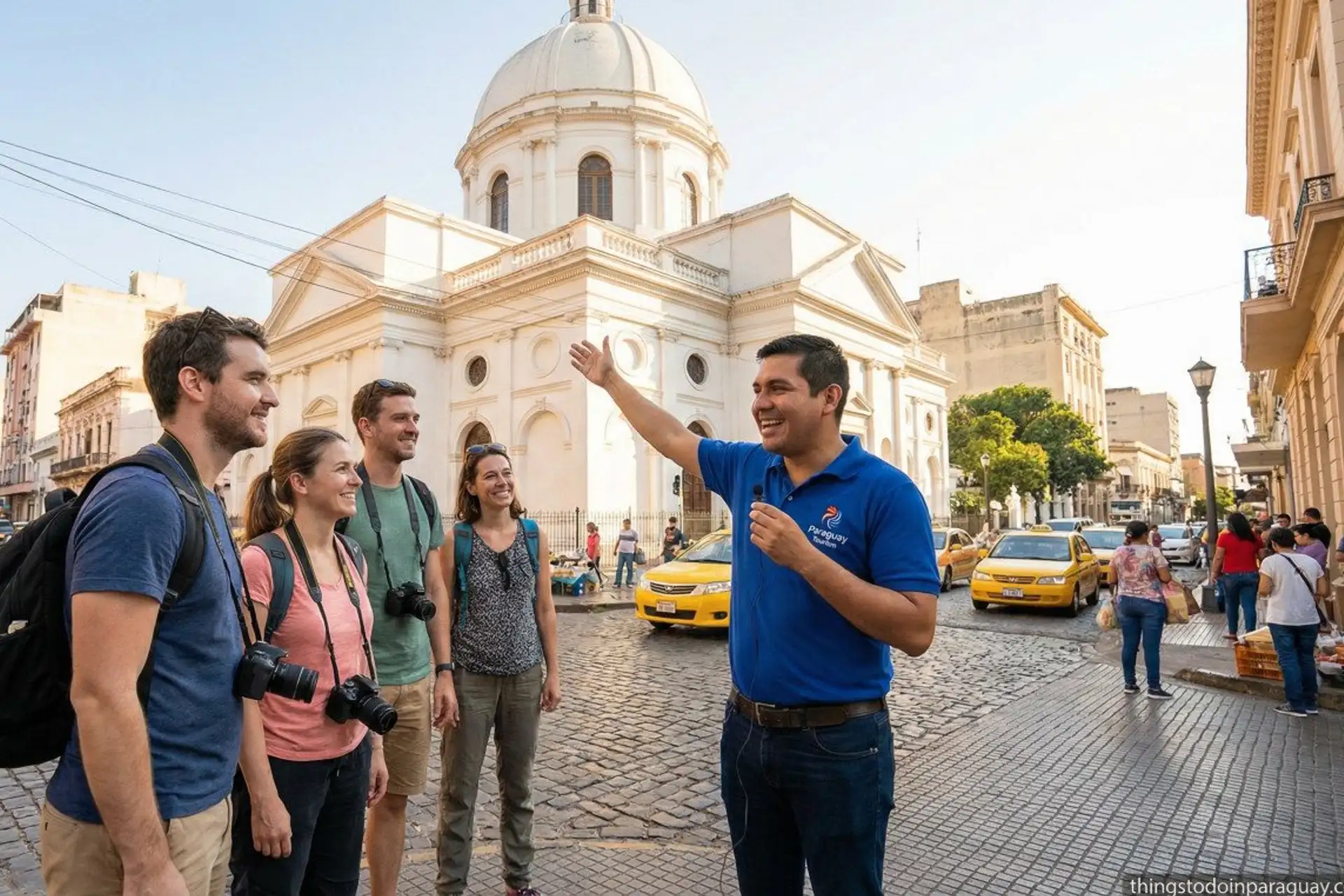
The history, covering the Jesuits, the Guaraní, the Spanish Crown and the slave-raiding expeditions from Brazil, is far richer if someone explains it. Ask at the visitor entrance whether guides are available, or hire an independent guide in advance. See the evaluation checklist in the FAQ.
Practical information
- Time needed
- A full day (roughly 12 to 13 hours from Asunción including driving) or, better, an overnight stay in Encarnación.
- Getting there
- About 400 km from Asunción by road (roughly 5 to 6 hours each way) by car or driver, or by long-distance bus to Encarnación plus a local bus or taxi.
- Costs
- Entry fees, bus fares, fuel and guide fees all change. Check current prices with the site, the bus companies or SENATUR before you go.
- Best time to go
- Cooler months and the early morning or late afternoon are the most comfortable. Summer midday heat is strong and there is little shade.
- What to wear
- Light clothing, a hat, sunscreen and closed, comfortable shoes for uneven stone.
- Official information
- UNESCO World Heritage listing (whc.unesco.org/en/list/648) and the Paraguayan tourism authority, SENATUR (senatur.gov.py).
Frequently asked questions
-
Is it possible to do the Jesuit ruins in one day from Asunción?
Yes, but it is a long day. Expect roughly 10 to 11 hours of driving in total, so an early start and a late return. If you prefer a relaxed pace, plan an overnight stay in Encarnación and see both missions the next morning.
-
What is the difference between Trinidad and Jesús?
La Santísima Trinidad is the larger, more complete mission, with a full central plaza, detailed stone carvings and remains of a bell tower. Jesús de Tavarangue is smaller and was never finished, so its unfinished arches give it a different, more open atmosphere. Most visitors see both.
-
Is there a lot of walking?
Both sites are large and mostly outdoors, with uneven stone and grass underfoot. Comfortable closed shoes matter more than fitness. Check with the site about accessibility if you use a wheelchair or walker, as some paths and ruins may be difficult to reach.
-
Can I visit Encarnación at the same time?
Yes. Encarnación is close to both missions and is the natural base for an overnight trip, with its riverside costanera and a choice of restaurants and hotels.
-
Is the light-and-sound show available every night?
Not as far as we know. It has run on selected evenings and depends on weather and the site's programme. Confirm current dates with the site or SENATUR if the night show is a priority.
-
How do I choose a local guide or driver?
Hire directly and compare more than one option. Check whether the operator or guide is registered with SENATUR, ask for the price, hours and inclusions in writing, find out what happens in case of rain or cancellation, ask whether the vehicle is insured, and read recent reviews on independent sites. Be wary of anyone who asks for full payment far in advance.
-
What should I wear?
Light, breathable clothing, a hat and sunscreen, as there is little shade at either site. Closed, comfortable shoes are important for the uneven stone paths.
-
Is this trip suitable for children?
Most families manage it well, especially with an overnight stay that breaks up the long drive. The open plazas and dramatic ruins tend to hold children's attention better than a typical museum, but bring water and snacks.
-
Can I cross into Argentina from here?
Encarnación sits across the Paraná River from the Argentine city of Posadas, and there is a road bridge between them. Border formalities and visa requirements depend on your nationality and change over time, so check with Paraguayan immigration (Migraciones) and the Argentine authorities. If you are heading for the falls instead, see the guide to Iguazu Falls from Asunción.
Plan Your Visit to the Jesuit Ruins
The Jesuits are gone, but their stones remain. Trinidad and Jesús de Tavarangue are the two UNESCO World Heritage sites in Paraguay, and the long trip south is well worth the effort. You can read more about the Jesuit reductions on Wikipedia and the city of Encarnación, and our day trips from Asunción guide covers closer options if you do not have time to go south.
Spotted something out of date? Let us know.