Paraguay Souvenirs: A Buyer's Guide to Authentic Crafts
Ñandutí lace, silver filigree, leather and ceramics, and how to buy them well
A buyer's guide to Paraguay souvenirs: Ñandutí lace, filigree jewellery, leather and ceramics, where they are made and how to tell handmade from copies.
Independent guide: we do not sell, book or arrange this trip or any service mentioned here, and no provider paid to appear. Prices, timetables and rules change — confirm them with the provider or the official source before you go.
About This Paraguay Souvenirs Guide
This Paraguay souvenirs guide is independent travel information. It does not sell tours, take commissions from shops or recommend a particular seller. It explains which crafts to look for, where they come from and how to buy them well on your own. Prices, opening days and customs rules change, so check before you go.
Paraguay Souvenirs Worth Bringing Home
Every visitor wants to bring something home, and in Asunción it is easy to end up with an industrial copy sold as handmade. The country does have a living craft tradition: delicate Ñandutí lace, fine ao po'i embroidered cotton, silver filigree, leatherwork, ceramics and wood carving. Authentic pieces take time to make, so they are rarely the cheapest option, but they last far longer than a mass-produced magnet.
This guide covers the best Paraguay souvenirs, where they come from, how to judge quality and how to buy fairly and bring them home without trouble.
The Crafts to Look For
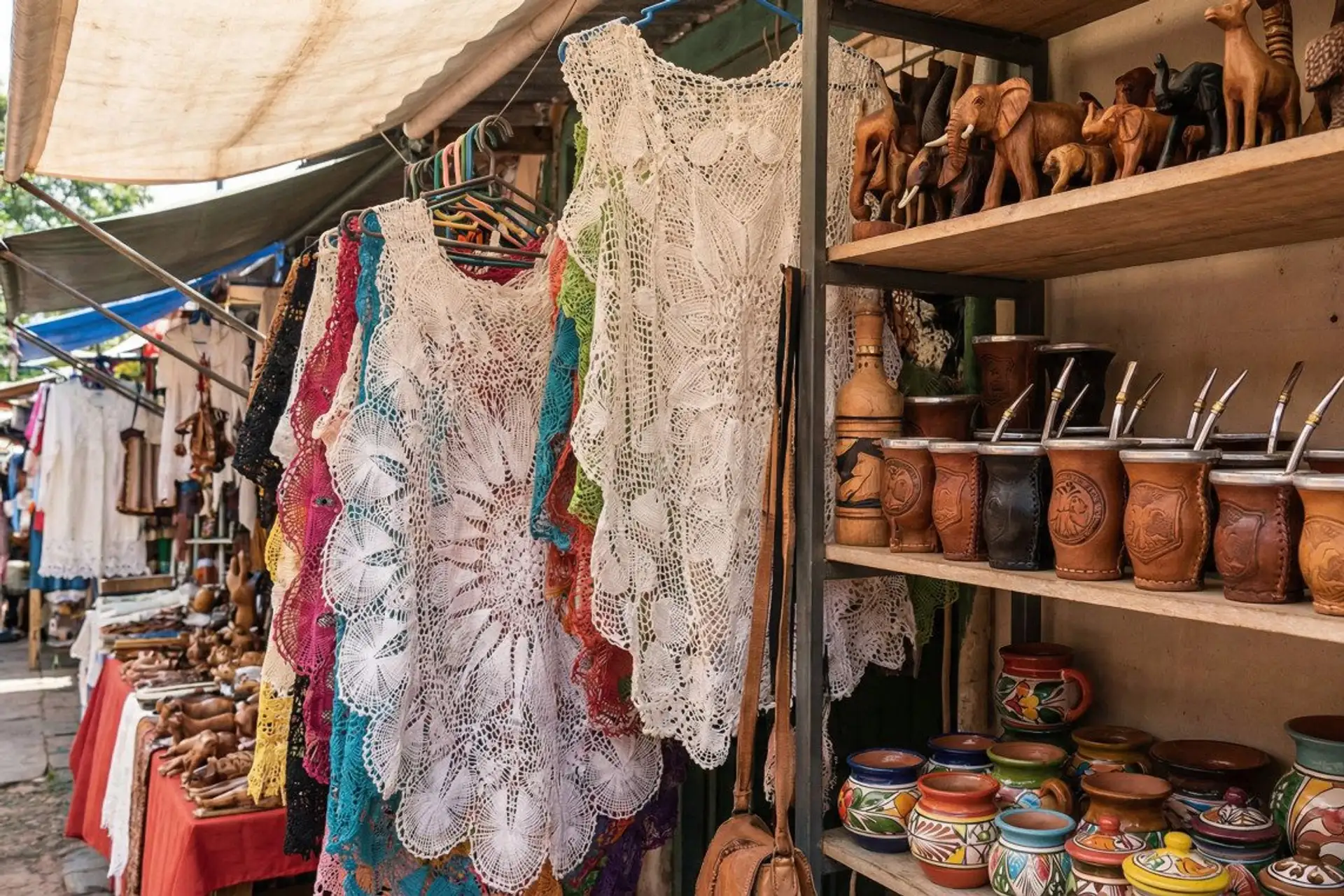
Ñandutí and ao po'i (textiles). Ñandutí, a Guaraní word meaning "spider web", is a fine, brightly coloured lace traditionally associated with Itauguá. Pieces can be small doilies or large framed works. Ao po'i is a light embroidered cotton used for shirts and dresses. To tell hand-made from machine-made, look at the back of the piece, check for tiny irregularities in the stitching and ask who made it. See the Wikipedia entry on Ñandutí for background.
Filigrana (silver jewellery). The town of Luque, near Asunción, is known for silver filigree, in which fine silver threads are shaped into earrings, pendants and bracelets. Check for a hallmark or ask the jeweller what the metal is, and compare weight and price across several shops.
Leather and tereré gear. The termo (insulated flask) and the guampa (cup) are symbols of daily life, because tereré, the cold yerba mate drink, is drunk all over the country. Leather covers for termos are common, and some workshops personalise them with a name or logo. A bombilla (metal straw) completes the set. See the yerba mate guide for the story of mate and tereré.
Ceramics and wood. Areguá, on Lake Ypacaraí, is known for its pottery, and there are wood carvings inspired by the Jesuit missions. Pottery is fragile, so think about how you will pack it.
For a day out that includes some of the artisan towns, see the Paraguay culture guide.
Where to look
-
Stop 1: Craft stalls and markets in Asunción
Start with the artisan stalls in the old city, such as La Recova, where you can see Ñandutí, ao po'i and leather goods up close and compare prices without commitment. Ask where each piece was made.
-
Stop 2: The filigree jewellers of Luque
Luque is a short trip from the capital and is the traditional home of silver filigree. Visit more than one workshop to compare quality, ask how long a piece takes and check payment methods.
-
Stop 3: Leather and tereré kits
Look for leather workshops that make termo covers, guampas and bags. Some will personalise items, but ask how long that takes before you order.
-
Stop 4: Ceramics and woodwork (optional)
If you have time, add a stop in Areguá for pottery or look for wood carvings. Pack ceramics carefully, and ask the seller for padding.
Tips before you go
-
Ask who made it and where
Genuine artisans can tell you where and how a piece was made. If the answers are vague, or the same item appears at dozens of stalls with identical finishing, it may be a copy.
-
Haggle gently, if at all
Bargaining is softer in Paraguay than in some other countries. Where prices are marked, expect little flexibility. At informal stalls, a polite request for a small discount for several items is more appropriate than aggressive haggling, and a fair price respects the work.
-
Carry cash in guaraníes
Established shops often take cards, but smaller artisans may deal only in cash. Withdraw cash from an ATM in advance and carry small notes.
-
Pack fragile pieces carefully
Pottery and filigree can break or bend. Ask for padding, bring bubble wrap or wrap pieces in clothes, and carry delicate items in your hand luggage.
-
Check customs rules before you buy
Textiles, leather and silver are usually fine, but rules vary by country, and items made from protected plants or animals, some woods, feathers or skins can be restricted. Check your own country's customs rules before you buy.
Practical information
- Time needed
- A few hours for the stalls in Asunción, half a day with Luque, and a full day if you include artisan towns such as Itauguá and Areguá.
- Getting there
- Asunción's craft stalls are easy to reach by taxi or ride-hailing, and Luque, Itauguá and Areguá can be reached by public bus or a hired car from the capital. Check current routes at the bus terminal.
- Costs
- Prices vary with the craft, size and quality. Hand-made pieces cost more than factory copies. Compare before buying and keep the receipt.
- Best time to go
- Mornings are best for markets, before the heat builds and while stalls are fully set up. Opening days vary in small towns, so check in advance.
- Official information
- Customs and craft export rules: check with your home country's customs authority and Paraguay's [Dirección Nacional de Aduanas](https://www.aduana.gov.py).
Frequently asked questions
-
Do artisans take credit cards?
Some established stalls do, but many artisans only take cash in guaraníes. Carry cash for small purchases and ask about card fees at larger shops.
-
Is it OK to negotiate?
Politely, yes, especially at markets and when buying several items. Do not push hard on handmade work, as the price often reflects many hours of labour.
-
Can I take these items through customs?
Textiles, leather and silver are usually fine, but restrictions vary by country, and items made from wood, plants, feathers, shells or animal products may be restricted. Check your own country's rules and keep your receipts.
-
Are the items fragile?
Pottery and filigree can be delicate. Ask for padding, pack them in your hand luggage if possible, and avoid stacking heavy items on them.
-
Can I buy in bulk for a shop at home?
Possibly, but arrangements for wholesale, export and shipping are a separate business matter. Agree prices, quantities, delivery terms and payment in writing, and check import rules.
-
Can I get leather goods personalised?
Many workshops can emboss or stamp a name or design. Ask how long it takes and whether there is an extra charge before ordering.
-
Are craft markets suitable for children?
Yes, children often enjoy the colours and watching artisans at work, but markets can be hot, crowded and not stroller-friendly.
-
What if I do not buy anything?
That is fine. Looking at craftsmanship and talking with artisans is a good way to learn about the culture.
Buy Less, Choose Well
Choose pieces that tell a story and that you will actually use. Many of the patterns and legends behind them come from Guaraní tradition. To see craftspeople in their own towns instead of market stalls, read the Paraguay culture guide on the Itauguá and Areguá workshops, and see shopping in Asunción for electronics and fashion if crafts are not the only thing on your list.
Spotted something out of date? Let us know.