School Placement in Asunción: A Guide for Expat Families
How to choose and enrol in a school in Asunción as a newcomer
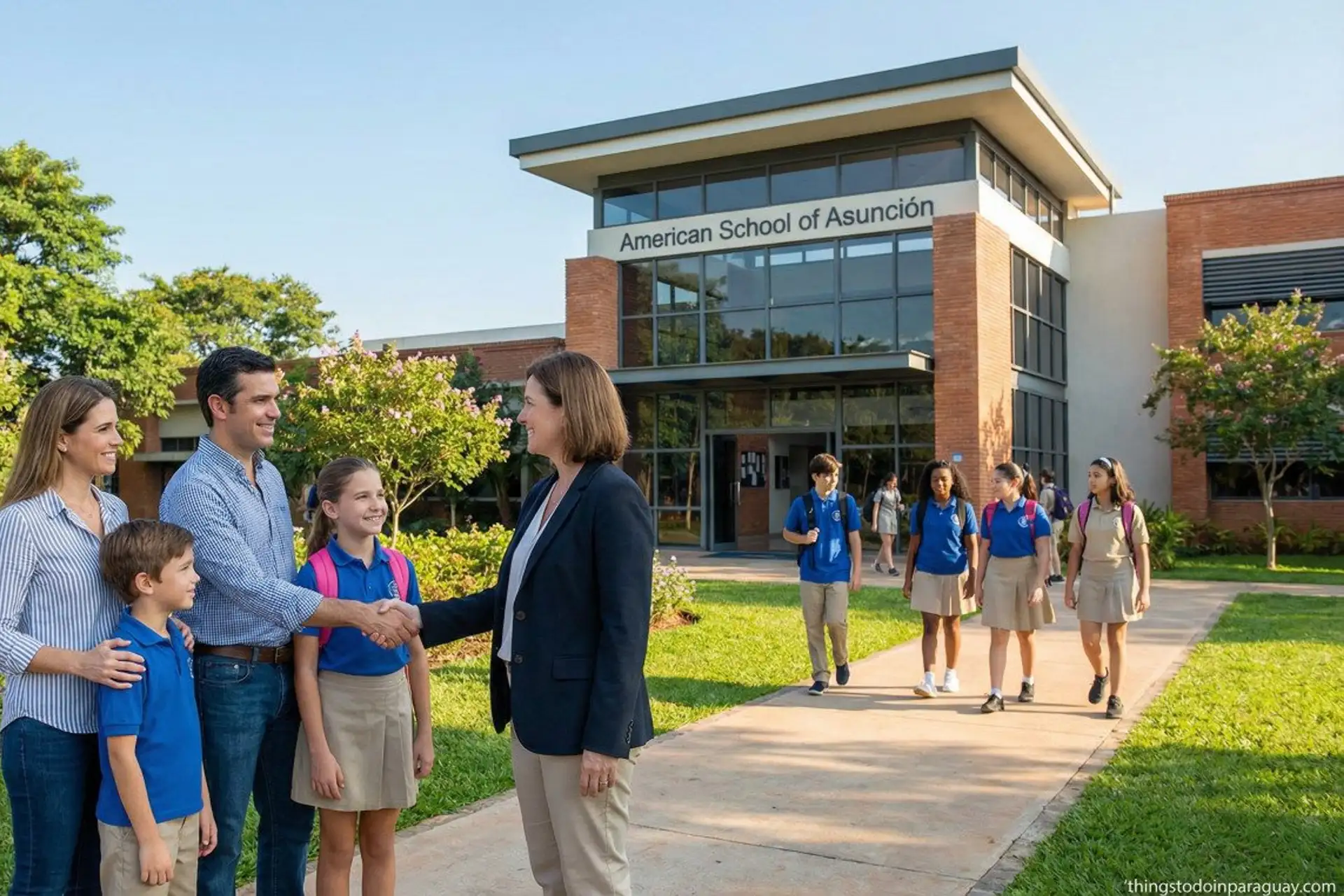
A practical guide to school placement in Asunción for newcomers: how to compare international and bilingual schools, typical enrolment documents and validation of studies.
Independent guide: we do not sell, book or arrange this trip or any service mentioned here, and no provider paid to appear. Prices, timetables and rules change — confirm them with the provider or the official source before you go.
Looking into school placement in Asunción? This guide explains how newcomers can compare international, bilingual and local schools, which documents enrolment usually involves and where to check the recognition of foreign studies. It is general information, not an admissions or consulting service: we do not shortlist, recommend or place students in schools, and details change from year to year.
Moving to a new country is a big adjustment for children, and a good school fit makes it easier. The sections below help you decide what matters to your family, ask the right questions and check what each school tells you.
School placement: what to decide first
Decide on the language of instruction, the curriculum and qualifications you want, the calendar (some international schools follow a different year from local schools), the location and the budget. Then contact several schools, visit if you can, and compare their answers. Schools are the best source on their own fees, availability and admissions, and the education authority is the best source on recognition of foreign studies.
Questions to ask each school
Ask about class sizes, language support for newcomers, how the school handles bullying and discipline, how students progress to later stages or universities, what accreditation it holds and what the total cost is. Ask for answers in writing and compare them side by side.
School placement in Asunción: what newcomers need to know
If you are moving to Paraguay with children, school is likely to be one of your first big decisions, and it shapes where you live, how your days work and how quickly your children settle in. You will probably have questions such as which schools teach in English, which follow a Northern Hemisphere calendar, how a school's programme fits with the one your children are leaving, and whether they will manage if they do not speak Spanish yet.
Asunción has a mix of public schools, private schools and a number of international and bilingual schools. Information is not always easy to find online, admissions processes can differ from school to school and places in popular grades can be limited. This guide explains how to do school placement yourself, what to compare and how to check what each school tells you. It is general information, and details change, so confirm everything with the school and with the education authorities.
How to compare schools for your family
Start with your family's priorities and work outwards. The main criteria usually are language of instruction, curriculum and qualifications, calendar, location and commute, size and culture, support for new arrivals and fees.
- Language. International schools usually teach mainly in English, while local and bilingual schools teach in Spanish, with varying amounts of English. Many schools also teach some Guaraní, Paraguay's co-official language alongside Spanish. Ask how the school supports children who are still learning the language of instruction.
- Curriculum and qualifications. Schools may follow the national curriculum, a foreign curriculum (for example American, British or German) or an international programme such as the International Baccalaureate. Ask which qualifications students finish with and where graduates go next, and check that these will work for your plans.
- Calendar. Some international schools follow an August-to-June year, while local schools generally follow a February-to-November year. A calendar mismatch with your home school can affect which grade your child joins, so ask early.
- Location and commute. Traffic is heavy at school-run times, so check how long the journey takes at the right hour. Many families arrange a school minibus (transporte escolar), which is usually a private service separate from the school, and which you should ask about directly.
- Fees. Tuition, enrolment fees and other charges vary and change, so ask each school for a current written fee schedule, including any one-time enrolment payment (cuota de ingreso) and what is not included, such as uniforms, books, transport and activities.
Schools that are often described as international or bilingual in Asunción include the American School of Asunción, Pan American, Goethe, San Andrés and Jules Verne. This is a factual list taken from the earlier version of this page, not a ranking or a recommendation, and you should check each school's own website for its current offer.
Steps to choose and enrol in a school
-
Clarify what your child needs
Note your children's ages, current grade, languages, any learning or health needs, interests and your preferred calendar. Decide how long you expect to stay, because that affects whether an international curriculum or a local one makes more sense.
-
Build a shortlist
Use the schools' own websites, the education authorities' information and conversations with other parents. Ask your employer or community groups for suggestions, but treat all recommendations as a starting point and verify them yourself.
-
Contact schools and visit
Ask each school about openings in your child's grade, the admissions process, assessment or interview requirements, deadlines, fees and the calendar. Visit if you can, meet staff and ask about class sizes, language support, how newcomers are welcomed, discipline and bullying policies, and what students do after graduation.
-
Check recognition and accreditation
If you need your child's schooling to be recognised, ask each school about its accreditation and about how its qualifications are recognised elsewhere. For validation of foreign studies in Paraguay, the education authority is the Ministerio de Educación y Ciencias (MEC). Confirm the process, documents and any translation or legalisation requirements with them.
-
Prepare the documents
Schools differ, but enrolment typically involves some of the following. Ask each school for its exact list.
- A completed application form and photographs.
- The child's passport or identity document, and often those of the parents.
- Recent school reports or transcripts, and sometimes a transfer or conduct letter from the previous school.
- Vaccination or health records.
- Where studies abroad must be recognised, legalised or translated copies of certificates.
- Proof of address and payment of the enrolment fee.
-
Apply, confirm and plan the first weeks
Submit the application early, because popular grades can have waiting lists. Get the offer, the fees and the start date in writing, and ask about orientation. Plan uniforms, books and transport, and think about the child's first weeks, including contact with other newcomer families.
Tips before you go
-
Start early
Popular schools and grades can fill, and documents such as transcripts and legalised certificates can take time to prepare.
-
Ask the same questions of every school
Use a short checklist (language support, curriculum, class size, fees, calendar, transport, accreditation) so that you compare like with like.
-
Visit in person
A visit tells you more than a website. If you are abroad, ask for a video call and speak to parents of current students.
-
Check recognition early
If your child may return to a school system abroad, check how that system treats the qualifications before you commit.
-
Budget for the extras
Tuition is only part of the cost. Ask about enrolment payments, uniforms, books, trips, transport and activities, and get the answers in writing.
-
Use independent advice
If you hire an education consultant, vet them as you would any adviser: ask for a written scope and fees, check independent reviews, and be cautious if they are paid by the schools they recommend.
Practical information
- Types of school
- Public, private, bilingual and international schools, with different languages, curricula and calendars.
- Calendars
- Some international schools run roughly August to June, while local and bilingual schools generally run roughly February to November. Confirm with each school.
- Costs
- Fees vary by school and change. Ask each school for a current written schedule that includes enrolment charges and extras.
- Typical documents
- Passport or ID, school reports or transcripts, vaccination records, and legalised or translated certificates where required.
- Official information
- Ministerio de Educación y Ciencias (www.mec.gov.py) for validation of foreign studies.
Frequently asked questions
-
Do my children need to speak Spanish?
International schools usually teach mainly in English, so Spanish is not normally required at the start, although children will pick it up. Local and bilingual schools may expect some Spanish or offer support classes. Ask each school what it provides.
-
What is the cuota de ingreso?
It is an enrolment or entry fee that many private schools charge on admission, separate from monthly tuition. The amount and the conditions vary, so ask each school for the current figure in writing.
-
Is there a waiting list?
Some popular schools have waiting lists for certain grades or for mid-year starts. Ask each school about availability for your child's grade and apply early.
-
How does school transport work?
School transport (transporte escolar) is typically a private minibus service that collects students from home. Routes, prices and reliability vary, so ask the school and other parents which services cover your area.
-
Are uniforms mandatory?
Most schools in Paraguay, public and private, require a uniform. Ask the school where to buy it and what is included.
-
Do schools offer the International Baccalaureate?
Some international schools offer the IB or parts of it, alongside schools following American, British, German or national curricula. Check each school's own website for its current programmes.
-
Can we join in the middle of the school year?
Many schools accept mid-year entrants, subject to space in the grade and to the school's calendar. Ask each school and confirm the start date in writing.
-
How are foreign studies validated in Paraguay?
The Ministerio de Educación y Ciencias (MEC) is the authority to ask. The process, documents, translation and legalisation requirements can change, so confirm them with the ministry and with the school before you rely on any summary. This is general information, not legal advice.
Next steps for school placement in Asunción
Once you have a shortlist, think about where you want to live, since the commute may decide the matter. Read the guide to the best neighbourhoods to live in Asunción, the apartment hunting guide and the cost of living in Paraguay article. If you are also sorting out your own status, see Paraguay residency. Spotted something out of date? Let us know.